Raising Readers: How Storytime Builds Strong Thinkers
There is something sacred about a child tucked into your lap, their eyes wide as you turn the pages of a favorite book. These moments feel tender and cozy — but they’re also doing powerful work beneath the surface.
Storytime isn’t just about books. It’s about connection. And that connection is shaping your child’s brain in profound ways.
What Happens When You Read Aloud
When you read to your child, you are quietly building the foundation for lifelong learning. With every page turned and every sentence spoken, your child is developing:
• Language skills
• A growing vocabulary
• Attention and memory
• The ability to understand sequences and cause-and-effect
• Emotional awareness
• Empathy and perspective-taking
Why Reading Matters So Much
Books expose children to thousands more words than they hear in everyday conversation. Stories introduce patterns, rhythms, emotions, and ideas that expand how children understand the world.
When you read together, your child is learning:
• How stories work
• How to predict what might happen next
• How to infer meaning from pictures and words
• That words carry power and purpose
• That reading is joyful, comforting, and safe
Simple Ways to Make Storytime Magical
Storytime doesn’t need to be perfect — it just needs to be present. Try:
• Using expressive voices and playful tones
• Pausing to wonder aloud (“What do you think will happen next?”)
• Letting your child turn the pages
• Rereading favorite books again and again — repetition builds mastery and confidence
Your child doesn’t need long lessons or formal instruction to become a reader.
They need your voice.
They need your warmth.
They need your presence.
Love Is the Foundation of Learning
Reading together is more than a literacy activity. It’s a relationship-building ritual. It tells your child, “You are safe. You are loved. Your thoughts matter.”
And that love — shared through stories, snuggles, and time — is the strongest foundation for learning there is.
Science of Play: How Little Brains Grow
To a child, play feels like pure fun. To the brain? It’s serious work.
When children play, their brains light up like a busy construction site. Building towers, pretending to be superheroes, or making up silly rules on the playground all help the brain form new connections. These connections are how children learn to think, move, talk, and understand the world around them.
Play activates many parts of the brain at once. Running and climbing strengthen motor pathways, pretend play builds language and imagination, and games with friends help grow emotional skills like empathy and self-control. Every giggle, experiment, and “oops, try again” moment helps the brain practice problem-solving and flexibility.
Neuroscience also tells us that play releases feel-good chemicals like dopamine, which helps with motivation and memory. When learning feels joyful, the brain is more open, curious, and ready to grow.
So when children are “just playing,” they’re actually building the brain skills they’ll use for a lifetime. Play isn’t extra—it’s essential.
Research-Backed Insights
Play strengthens neural connections during early childhood, supporting cognitive, social, and emotional development (Center on the Developing Child, Harvard University).
Pretend play supports executive function, including self-regulation and flexible thinking (Diamond & Lee, 2011).
Joyful learning increases dopamine, which improves attention and memory formation (Howard-Jones, 2014).
Active, hands-on play builds brain architecture more effectively than passive learning (Ginsburg, 2007; American Academy of Pediatrics).
Why Play Is the Foundation of Learning
Play, the Foundation of Learning
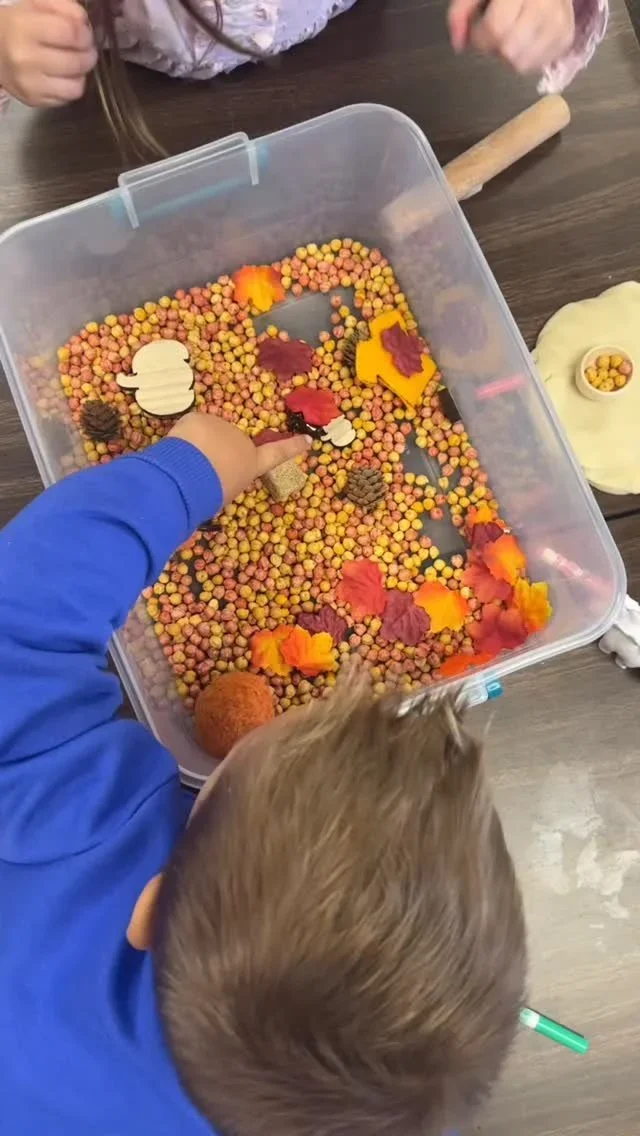
If you’ve watched your child turn a cardboard box into a rocket, or stir pinecones into pretend soup, then you’ve seen real learning in motion. Children don’t need elaborate lessons or specialized tools. What they need—more than anything—is time and space to play.
Play Is How Children Make Sense of the World
From the outside, play looks simple. Inside your child’s mind, though, something extraordinary is happening. As they stack blocks, act out stories, dig in the dirt, or explore imaginary worlds, their brain is forming and strengthening pathways that will support later reading, writing, reasoning, and creativity.
Play is not separate from learning.
Play is learning.
During play, children naturally begin to:
solve problems
experiment and test ideas
communicate and collaborate
manage frustration and regulate emotions
think creatively and flexible
A child building a tower is exploring early engineering.
A child hosting a pretend cafe is developing language and social skills.
A child drawing or sculpting is strengthening fine motor skills and planning.
Encourage Meaningful Play
Supporting play doesn’t require more toys or rigid plans.
Try:
offering open-ended materials (blocks, nature items, art supplies)
protecting unstructed time
letting your child lead without stepping in
embracin a little mess — that’ where discovery lives
The next time you see your child immersed in imaginative play, pause and mile. You’re witnessing the deep, beautiful work of learning.